Case study · Live in the Bay Area
The Unlisted
A hand-picked guide to the Bay Area’s hole-in-the-wall counters, diners, bakeries and bars. Human curated, AI enriched, and built on a budget under $100.
The best places are the ones apps bury
Review apps rank what’s already popular. The more a place is written about, the higher it climbs, so the nine-stool noodle counter and the bakery that sells out by nine sink below the places everyone already knows.
Every city keeps a second list, in the heads of locals. I wanted to write it down: a guide that feels like a tip from the cousin who knows a guy, with a short story for each place and the one thing to order.
I ran it like a product launch: set the strategy and the rules up front, made every call, and directed AI as my engineering and research team.
Rules I set before building anything
- Under $100, all inFree hosting tier, a domain I already owned, and a hard cap on AI research spend.
- Open data onlyNo Google or Yelp data. Places come from OpenStreetMap, local press and suggestions.
- AI runs once per place, never per visitorResearch happens up front and is saved, so the site costs nothing extra as it grows.
- A person approves every placeAI drafts. Nothing goes live until I’ve read it.
- Your lists stay yoursBucket List, stamps and ratings live on the visitor’s device. No accounts.
Human curated, AI enriched
- FindPull every food and drink venue in the region from OpenStreetMap, then filter out chains.
- ResearchAI reads what’s been written about each place and drafts its story, its score and what to order, with sources and a flag on anything it couldn’t confirm.
- TriageDrafts are sorted by risk: must-check (might be closed, or only one source), skim, and low risk.
- ReviewI approve, fix or drop each one on a review page built for the job.
- PublishApproved places go live with a “last checked” date. Visitors can suggest more.
A score that shows its math
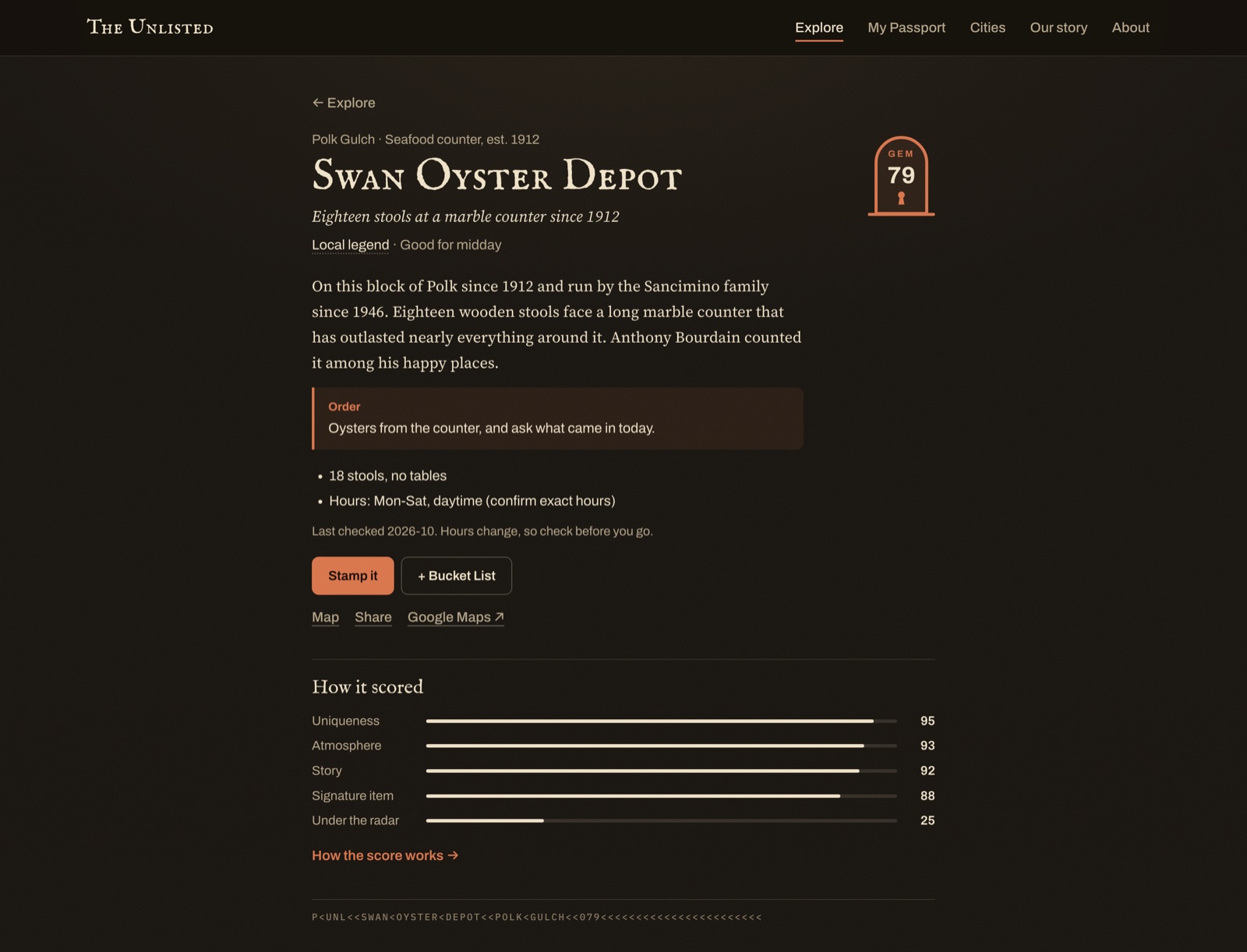
Every place gets a Hidden Gem score from 0 to 100, built from five marks: uniqueness, atmosphere, story, a signature dish, and how far under the radar it is. The weights and a live calculator are public on the site, along with a plain list of what the score gets wrong.
The first test batch taught me something. Famous places kept landing on top, simply because more had been written about them. So I added the fifth mark, “under the radar”, set by how well-known a place is. Legends can still score well. They just don’t win by default.
On the site, the score sits on a little arched door with a keyhole: the Gem door.
Keeping the AI honest
AI drafts can sound certain and still be wrong, so the process assumes they will be. Every draft lists its sources and flags what it couldn’t verify, and a person signs off before anything is published.
It earns its keep. Review caught a bakery story that named the wrong founder; the bakery’s own history set it straight. And when the research couldn’t actually reach one source I’d planned to use, I removed the claim from the site instead of leaving it in. The rule on the site is simple: if a page disagrees with the sign on the door, believe the door.
Five looks, shaped by feedback
- Speakeasy neonMoody, but hard on the eyes. Gone after the first review.
- Fight-night posterTurn-of-the-century boxing bills on newsprint. Striking, but it skewed toward one audience.
- PassportDarker and more secretive: lists became a Bucket List and Stamps, and scores became visa stamps.
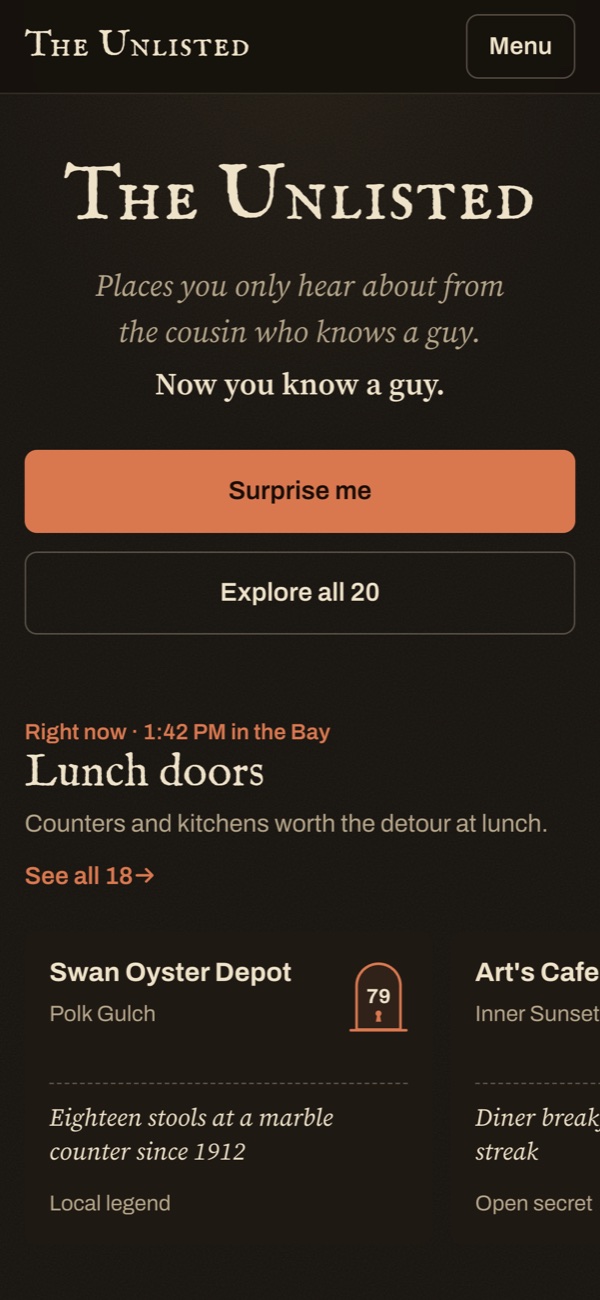
- Quiet passportFeedback: too busy. One accent color, plain-language labels, fewer boxes and four clear places to go.
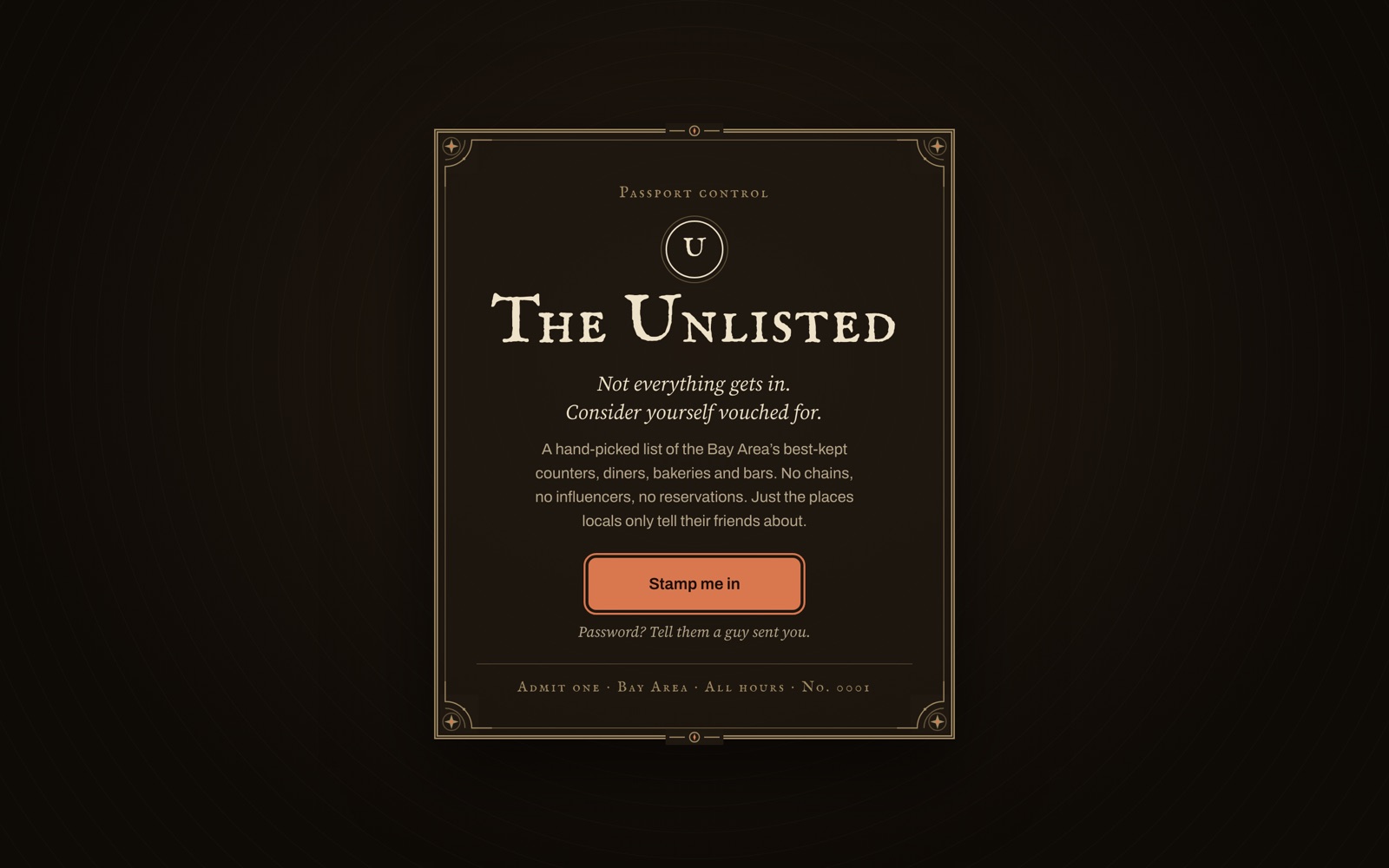
- Sepia antiqueAn old passport found in a drawer: letterpress titles, the Gem door, and a welcome gate that stamps you in.
Where it goes from here
- More doorsAbout 145 more Bay Area places are researched and waiting on review.
- San Diego98 places researched. It opens once a city switcher is in.
- Search by mood“A dim counter where the cook talks to you.” Search that understands what you mean, not just the words you type.